Saturday, June 23, 2012

The end of another course


My goal and hope for my future as an early childhood professional is that I provide a warm and accepting environment for the families and children who I work with.  I want to create an environment where children feel safe and free to be themselves and not have to worry about being stereotyped.  I want children to be able to stand up for what is right and be open minded and accepting of differences.  I want families to see the center not just as a place to drop off their child but as a place of excitement and wonder where their child will be loved, accepted, and inspired. 

I want to say a heartfelt thank you to each member of this class.  I don’t think of each of you as just a classmate but as a valued colleague whom I am able to bounce ideas off of and get honest feedback.  Without the support from each other this journey would have been a long and boring ride but we have made it more bearable for each other.  So again dear WILDFLOWERS it is not good byes but see you in the next course. 


WILDFLOWERS

Without our differences our world would be bland
Individuals need to be able to shine no matter what
Learn to accept each other’s culture, beliefs, and languages
Differently abled doesn’t mean they can’t
Follow your heart
Level the playing field with education
Open the mind to acceptance
Willingness to learn about others
Ears open to listen for clues and hurt hearts
Respect
Strong enough to stand up for others rights


Saturday, June 16, 2012

Impacts on Early Emotional Development


Central and Eastern Europe-Commonwealth of Independent States

The area I choose to look at was Central and Eastern Europe-Commonwealth of Independent States.  The reason why I chose this area is because I know so little about the state of care and education in this part of the world.  I am curious as to the conditions the children live in. 
The challenges that the children of this area are experiencing include children who have disabilities are kept socially distance, violence within schools, extreme poverty, and a lack of access to social services such as health care and child care. 
In the Kyrgyz Republic children are placed in institutions because lack access to social services such as day care.  Parents are not able to work and pay for the family.  They turn their children over to institutions.  The private institutions have no monitoring by the government and provide many safety hazards such as lack of heating, poor sanitation, and deprive children of their family environment.  Reform is coming in the Kyrgyz Republic to help with child care reform (UNICEF, 2011).  Children in Montenegro suffer mostly from poverty-every 10th child suffers from poverty.  Children under the age of 5 are the heaviest concentration of those affected.  Parents who have not finished secondary schooling, children from north of Montenegro and rural areas are hit the hardest.  Poor households with children are farthest from primary healthcare and schooling (UNICEF, 2011). 
The experience of poverty is going to have a lifetime effect on children.  Without proper nutrition and healthcare they will not succeed in school as well.  They will be at an academic disadvantage to their peers who have had proper nutrition and healthcare.   If they are malnourished they may not have the strength and muscle tone that is needed for an active life style and they will not be able to fight off many childhood illnesses.  For the Kyrgyz Republic children who are placed in institutions they are deprived of the interaction and care that a parent figure will give them.  They may have a higher rate for depression and an inability to relate or bond with others.
As a professional in the early childhood field I feel sadness and struggle for these children.  With such odds against them they are going to struggle more than any child should have to.  It does seem that the government is trying to make the proper reform in the childcare area, but knowing how long it takes and the red tape that will come, it may be too late for many children.  With properly trained and caring professionals in the early childhood centers, these children will have more success than if they were just left alone.  It is my hope that in the reform the governments are making that they see the huge impact early childhood professionals make in a child’s life.
                                                      
Resources

UNICEF (2011). Analysis of the Situation of Children’s Residential Institutions in the Kyrgyz Republic.  Retrieved from: http://www.unicef.org/infobycountry/index.html

UNICEF (2011). Every tenth child in Montenegro is poor.  Retrieved from: http://www.unicef.org/infobycountry/index.html

Saturday, June 9, 2012

The kids are learning WHAT?


My initial reaction to the book excerpt So sexy so soon, was amazement (Levin, D. E., & Kilbourne, J., 2009).  The thought that children at such a young age are being hit with these ideas and are able to process them was horrible.   Once I was able to close up my jaw from the shock I was able to process the ideas more clearly.  I started to analyze things I saw on TV and toys that are in the store and even my own child’s behavior.   I can see the ideas that they shared happening all around me.

One experience that I had recently was in talking with another professional colleague who worked with college level adults.  She was asking me my take on a conversation she had with a friend.  The friend has a preschool daughter (3-4 years old).  The mother got a phone call from the school about and incident that happened at during the day.  The girl leaned over the table during activity time and kissed a boy.  She had her tongue in his mouth and was holding on to him so he would not get away.  The mother did not understand why everyone was so upset.  She was asking “is this not normal?-they’re just kids”.   When I first heard this story I though “what is she learning at home?”   After reading this book excerpt I had to rethink.   It may not be what she is learning from her parents but the media she is watching.

This spring at our school play day the children were allowed to wear their swimsuits.  The children were third and fourth graders, who know what they are looking at.  I must be old fashion but the swimsuits the girls were wearing were a little lacking in the material department.  The girl’s new fashions were bikini tops and boy shorts.  I thought I was at a skin farm.  These bikinis’ showed way to much skin for 8 year old girls.  The girls were discussing with each other how “hot” their suit looked on them. 

These messages will impact young children in a negative manner.  The girls will think that they should wear clothes that are reveling and make them look “hot” in order to fit in with their peers.  If they do not have the “right” clothes they may be ostracized by the larger group.  This will deepen the message and cause them to go down a bad path-one of trying to be accepted.  Boys will be given the message that this is how girls are supposed to look and act.  So the message they will get about gender is that boys were just shorts and girls wear skimpy tops and boy bottoms. 

As teachers we have to stop looking the other way when issues come up.  We have to confront them even though it may be difficult and uncomfortable.  As early an early childhood professional I could promote books and pictures of children who are having fun in a nonsexual manner.  I could also use pictures and books with more sexualized images to discuss how it could hurt the image the child has of themselves.  We will also look at boys and girls who are outside of the normal stereotype and talk about it they are boys or girls and why they think that.  Also it is important to have the discussion that they are each different and that they don’t have to follow the rigid stereotypical roles. 

Resources
Levin, D. E., & Kilbourne, J. (2009). [Introduction]. So sexy so soon: The new sexualized childhood and what parents can do to protect their kids (pp. 1-8). New York: Ballantine Books. Retrieved from:http://dianeelevin.com/sosexysosoon/introduction.pdf

Saturday, June 2, 2012

I can accept others


The ism that I have experienced in my personal life is my religious beliefs.  I chose to go to Church and I hold my religious beliefs tightly.  Some people feel that I don’t understand or accept specific groups of people.  They feel that they have to act and talk differently around me.  Some hold the stereotype that I will judge them for the actions they take or choices they make.   Emotionally this affects me in that I feel left out and not trusted.  People have not taken the time to get to know me for who I am.  Cognitively I understand they are basing their knowledge of me based a stereotype they have from the media or past experiences with others.  Physically I am worn down by having to work harder to get others to accept me or get to know who I am and what I stand for.

The consequences that I see affecting the children and families in which I work with is they may not trust me with family issues.  A gay/lesbian family might not disclose their situation for fear of me trying to burn them at the stake.  I want families to know that yes I am a religious person and I don’t participate in certain life styles but I do accept that others may.  I can be trusted and I try not to judge others for their life choices.  The children may be taught to keep parts of their lives secret from me.  Their parent may be afraid of what I may say or do if “secrets” are reveled.  All families regardless of their life choices are welcome and will be accepted.  

Saturday, May 19, 2012

Family communication


A day at the splash pad


The situation that I observed was a father and his two daughters at the community splash pad.  There are many jets that shoot water into the air and the children can run through them and get wet.  The first girl was around 7 or 8 and the younger girl was about 2.  I was there with my son and water loving puppy enjoying the cool water on a day that was quickly warming up.  


What I noticed and observed
The father was interacting with the girls and encouraging them to explore the fountains of water shooting up from the ground.  He would occasionally lower himself to where he was closer to eye level with his younger daughter.  He was very encouraging and would clap when she squealed at getting wet. The older girl was not as excited about getting in the water and kept asking if it was ok that she got wet.  The father kept encouraging her to get wet but did not look at her when he did.  He was focused on watching the younger girl.  He would occasionally gather handfuls of water and chase her with them.


Was it effective?
The effective communication strategies that I noticed were that the father was including the girls in the conversations.  He would talk to them and wait for their responses.  He would lower his body to where it was more at their level.  He was a taller gentleman so it was more noticeable.  He also did not intrude on what they were trying to do but was waiting for them to include him into their play.  The older girl was more willing to accept his participation.  The younger girl was more interested in taking the risk of joining other child’s play but would occasionally come back to check on Dad.

What may have helped?
What may have been more effective when talking to the older girl, would have been for the father to look at her when he was encouraging her to get into the water.  He could have asked her why she was more timid about getting into the fun of the water.  She may have needed that act of concern.  As a parent I realize it is harder when you have a toddler you are trying to keep track of as well.  When he was praising the younger girl at her braveness for exploring the water he could use more specific feedback.  He could say something such as, “great job on getting your feet in the water” or “you are brave for running through the fountain”.   Then follow up with questions such as “how does the water feel on your feet?” or “where does the water come from?”  These types of questions will help them to think more deeply and may start a new conversation and investigation. 

What they may have felt
The younger girl may have felt empowered by her father’s praises and she was more willing to try new experiences.  She was willing to take larger risks because of the encouragement and support she received. The older girl may not have felt as supported and that was why she was more timid at joining in on the fun.   

My insights
In watching the interactions with the father and his two girls it made me think about my own conversations with my son and young children I work with.  I am going to try and use more open ended questions and questions that may spark a whole new investigation.  I don’t feel that I listen as well as I should to children and need to pay more attention to what they are trying to tell me.  I need to slow down and take a step back and spend time just listening to what is going on around me. 

Saturday, May 12, 2012

New Class

Having a great time with this new class.  I am learning so much about adding anti-bias strategies in my classroom environment.

The Little Gray House Center


The Little Gray House Center


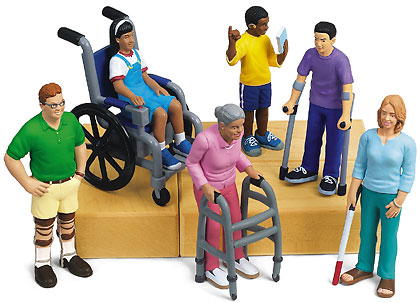
For my home center I would want to include items and philosophies that make all feel welcome.  I want this to be a place where children and their families can come to learn, feel supported, grow academically and socially, and feel safe.  I want all families to feel included regardless of economic status, ethnicity, language, abilities, or family make up. 

Some of the concepts that I want to include in my center include:
Check in and information center-
At the check in center families will sign in their child for the day.  The rational for the sign in is for attendance as well as a security measure.  At the check in parents can get information that is relevant for their family as well as activities that are happening at the center or in the community.

Open floor plan-
            The rational for the open plan is so that students regardless of their age and abilities are able to maneuver safely.  If there are lots of items in the way visibility is impaired for staff as well as children.  With the open plan children can explore without the fear of items in their way that could hurt them. 

Culture Corner-
            This is an area where families can display items they feel are an important part of their culture or heritage.  I saw the idea of the video of Adriana’s home care center.  I am torn between having multiple families share at the same time or just one family at a time.  With multiple families sharing children can compare and contrast the items. 


Some of the items that I feel are important to include in my center are:

Comfortable furniture-                                                                               
Easy-Clean Comfy Furniture
I want to incorporate furniture that is not only comfortable for them to use but also similar what they may have at home.  In the sleeping area the children will have cots or cribs depending on their age or needs.  Throughout the center I want couches or bean bags for children to sit on for reading with a friend, family member, teacher, or independently.  In the home center there will be a kitchen set, table and chairs for them to sit at, doll size crib, and child size coach and chairs. 

Pictures-
            Pictures of different families (single parent, same sex, mixed ethnicity, or adoptive), differing abilities, and multiple cultures in differing settings will hang on the walls of our center.   Also I will take pictures of the children in various setting and activities.  I want to also take and hang up pictures of the children with their families.  This will hopefully help the children to feel more comfortable at nap time or other times they may feel sad or lonely.

Books-
            The books will range in topics from different cultures, careers, differing abilities, multiple languages, countries, etc.  Books are not only for reading pleasure but for teaching different concepts and explaining hard concepts to children in a safe manner.


Centers- In the play/education area centers will be situated for children to explore.


Dramatic Play-
            This is an area where children can act out situations that are happening in their own life.  They can sort out the feelings and emotions in a safe environment with little threat of ridicule.  Parents can donate items from their own home that can be incorporated by the children. 
           

Persona Dolls-
            Teachers and children can use the dolls to act out situations without using the actual names and places of an incident.  The dolls should be multi-age, multi-culture, and have both boy and girl dolls.


Personal Childhood Web

Mom-My mother
Influence: showed me a love of learning that has lasted a life time. She would have “Tea Parties” with me but insisted on real food not pretend. She would read to us each night and tuck us in. She showed her love and affection by being there and showing me how to make it on my own. Her impact on my life is ongoing. She is still guiding me to be a better and stronger person.

Dad: My birth father
Influence: taught me that continuing your education may be tough but is always worth the effort. He would take me on camping trips each summer and road trips to historical places. He always called me “sis”. His influence takes me to historical sites. I have an appetite for history.

Don: My step-dad (Dad)
Influence: taught me that hard work was important in life. He taught me how to drive my first stick shift. He moved me back and forth to college many times without question. He considered me his own and became my father when mine abandoned me. He still checks in on me and makes sure my head is on straight.

Grandma D: Paternal Grandmother
Influence: she taught me how to be a “proper” young lady. I remember how I should behave to this day. She showed me how to make ordinary everyday things into magical paths to the imaginary world. A refrigerator box could be a house, doctor’s office, fort, or a cave below hundreds of feet. She showed me how to cook and sew so I could be a good wife. Though she is not with me now I still can look at a plain item and imagine where it could lead me.

Grandma Z: Maternal Grandmother
Influence: taught me that women could be fierce and independent. She loved flowers and taught me a love of them as well.